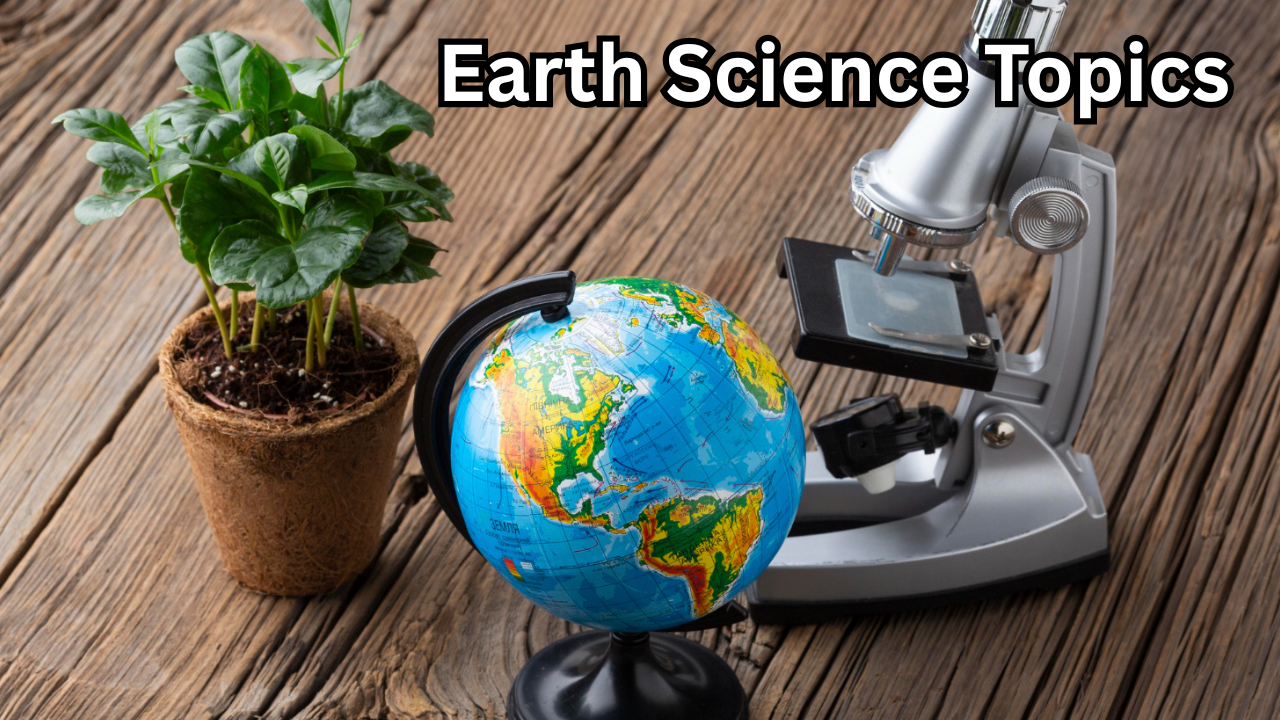
Earth science topics sit at the heart of how we understand our planet, protect its resources, and prepare for what lies ahead. From the shifting of tectonic plates to the invisible currents of the atmosphere, this field connects everyday life with the profound forces that shape the Earth. As climate challenges and environmental questions grow more urgent, exploring these ideas has become not only fascinating but also deeply meaningful for students, educators, and curious minds around the world.
The broad scope of planetary studies
The study of Earth goes far beyond rocks and soil. It blends geology, meteorology, oceanography, and environmental science into a single story about how a living planet works. These disciplines help explain why mountains rise, why storms form, and how oceans regulate global temperatures. When people explore these connected areas, they gain a clearer picture of how natural systems interact and why even small changes can ripple across the globe.
Modern planetary science also uses satellites, remote sensing, and advanced modeling to reveal once invisible patterns. Researchers can now track ice loss in polar regions, measure subtle movements of continents, and monitor atmospheric gases with astonishing precision. This technological leap has turned the study of Earth into one of the most data-rich and impactful scientific fields today, guiding decisions that affect agriculture, urban planning, and disaster preparedness.
Why understanding our planet matters today
In a world facing rising sea levels, extreme weather, and shifting ecosystems, knowledge about Earth is no longer optional. It is essential for survival and sustainability. When communities understand how natural hazards work, they can build safer cities and develop smarter response strategies. For example, earthquake research helps engineers design buildings that can withstand seismic shocks, while climate modeling helps governments plan for long-term water and food security.
Beyond practical benefits, learning about Earth fosters a sense of stewardship. People who understand how fragile ecosystems are become more likely to protect them. This awareness leads to better conservation policies, more responsible use of natural resources, and a deeper respect for the planet we call home.
Earth science topics and their role in education
In classrooms around the world, earth science topics provide a gateway into scientific thinking. Students learn how to observe patterns, test hypotheses, and connect evidence to real-world outcomes. Unlike some abstract sciences, the study of Earth feels immediate and relatable because it deals with landscapes, weather, and materials people encounter every day.
Teachers often find that these subjects spark curiosity in learners who might not otherwise be drawn to science. When a student sees how clouds form above their own town or how rivers shape familiar valleys, scientific concepts come alive. This personal connection makes lessons more engaging and helps build a strong foundation for future studies in environmental fields, engineering, or even public policy.
Geology and the story written in stone
Geology is the narrative of Earth’s deep past. Every rock layer tells a story of ancient seas, volcanic eruptions, or long-lost forests. By studying minerals, fossils, and landforms, geologists reconstruct how continents moved and how life evolved alongside a changing environment. This historical perspective is crucial for understanding present-day landscapes and predicting future changes.
Resource management also depends heavily on geological knowledge. The discovery of groundwater, metals, and energy reserves relies on understanding how Earth’s crust is structured. Responsible extraction and sustainable use of these resources can only happen when scientists know where they are and how they formed.
Weather, climate, and atmospheric dynamics
Meteorology and climatology explore the behavior of the air that surrounds our planet. While weather describes short-term conditions, climate reveals long-term patterns that influence ecosystems and human societies. Together, these fields help explain why deserts form, why monsoons arrive on schedule, and why polar regions are warming faster than the rest of the globe.
Advances in climate science have made it possible to link human activities with rising greenhouse gas levels and shifting temperature trends. This connection highlights the importance of informed decision-making, from energy use to transportation planning. Understanding these processes allows societies to adapt and mitigate risks before they become irreversible.
Oceans as the planet’s hidden engine
Covering more than seventy percent of Earth’s surface, the oceans play a central role in regulating climate and supporting life. Ocean currents distribute heat around the globe, while marine ecosystems produce a large share of the oxygen we breathe. Studying these vast waters reveals how interconnected the planet truly is.
Oceanography also sheds light on challenges such as coral bleaching, overfishing, and sea-level rise. By monitoring changes in temperature, salinity, and biodiversity, scientists can identify warning signs early and suggest ways to protect fragile marine habitats. This research is vital for coastal communities and for the global food supply.
Environmental systems and human impact
Human activity has become one of the most powerful forces shaping Earth. Urbanization, agriculture, and industry alter landscapes and ecosystems at an unprecedented scale. Environmental science examines these interactions, seeking ways to balance development with conservation.
Through careful observation and modeling, researchers can predict how forests respond to deforestation, how rivers react to dams, and how wildlife adapts to changing habitats. This knowledge guides policies that aim to reduce pollution, restore damaged ecosystems, and promote sustainable practices that benefit both people and nature.
Technology is transforming planetary research.
The digital age has revolutionized how scientists study Earth. Satellites orbiting the planet collect continuous streams of data about land cover, ocean temperatures, and atmospheric composition. Drones and automated sensors provide close-up views of glaciers, volcanoes, and remote ecosystems that were once difficult to reach.
These tools allow researchers to track changes almost in real time, making it easier to respond to disasters and long-term trends alike. When combined with powerful computer models, this information helps scientists simulate future scenarios and evaluate the potential impact of different environmental policies.
Careers shaped by a deeper understanding of Earth
A background in earth science topics opens doors to a wide range of careers, from environmental consulting to disaster management and renewable energy development. Professionals in these fields apply scientific principles to solve practical problems, whether it is assessing the stability of a hillside or designing a wind farm.
As sustainability becomes a global priority, demand for experts who understand Earth systems continues to grow. Governments, businesses, and non-profit organizations all rely on this expertise to make informed choices that protect both the economy and the environment.
Inspiring the next generation of explorers
Young learners who engage with earth science topics often develop a lifelong curiosity about the natural world. Field trips, experiments, and hands-on projects make abstract concepts tangible and memorable. This experiential learning helps students see science not as a set of facts, but as a dynamic process of discovery.
When education emphasizes real-world connections, it also encourages critical thinking and problem-solving. These skills are valuable far beyond the classroom, preparing students to tackle complex challenges in any career they choose.

Global collaboration for a shared planet
No single nation can address environmental challenges alone. Research in earth science topics thrives on international cooperation, with scientists sharing data and insights across borders. This collaboration leads to more accurate climate models, better disaster forecasting, and a deeper understanding of global ecosystems.
By working together, researchers can identify patterns that might be invisible within a single region. This collective effort strengthens humanity’s ability to respond to crises and to build a more resilient future for all.
The future of planetary knowledge
Looking ahead, the field will continue to evolve as new technologies and ideas emerge. Artificial intelligence, for example, is already being used to analyze vast datasets, revealing trends that might otherwise go unnoticed. As these tools become more sophisticated, they will further enhance our ability to understand and protect the planet.
Public interest in sustainability and climate awareness also means that earth science topics will remain central to education, policy, and innovation. The more people learn about Earth, the better equipped they will be to care for it.
A meaningful conclusion for a changing world
Our planet is a complex, dynamic system that deserves careful study and respect. Through the lens of earth science topics, we gain not only knowledge but also a sense of responsibility toward the world around us. By understanding how Earth works, we empower ourselves to make choices that support a healthier, more balanced future. In an age of rapid change, this wisdom is not just valuable; it is essential for ensuring that generations to come inherit a planet that is still full of life, beauty, and possibility.
Also Read: Tightrope Britannica: The Powerful and Positive Story Behind a Fearless Art